

Wellington’s commercial property market is under sustained pressure, and the latest data suggests these conditions are now directly influencing investment decisions and the future shape of the CBD.
Property Council New Zealand’s April 2026 Wellington Market Confidence Survey shows a clear downturn. Over the past 24 months, 95% of respondents report declining demand and rising vacancy in the CBD. A further 91% say Wellington is now less competitive than other major centres, while around 70% are planning to exit, delay, or reduce investment over the next two to three years.
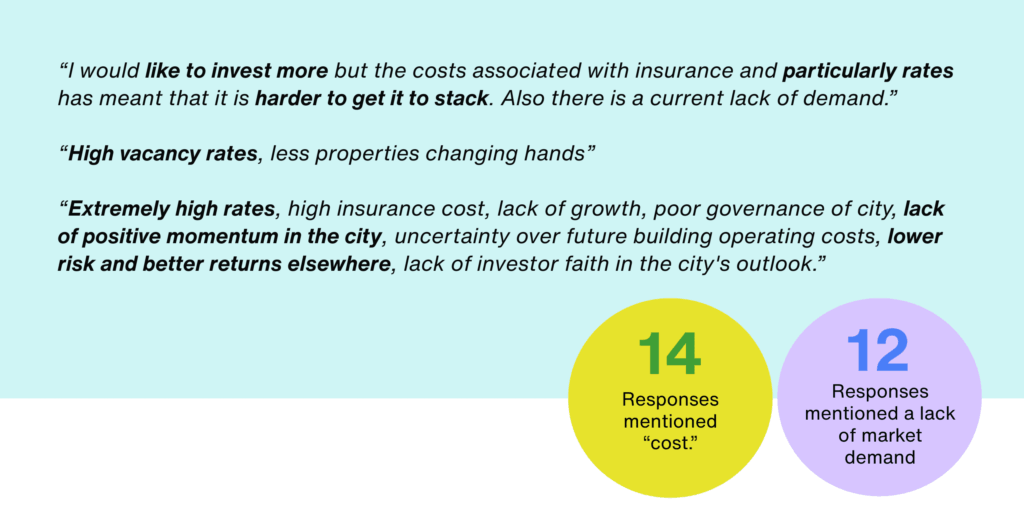
These results sit alongside persistent cost pressures. Respondents consistently identify rates, insurance, and operating expenses as key barriers, with rising overheads reducing net income, lowering property values, and making new development harder to finance. The outcome is a reinforcing cycle: weaker demand, higher vacancy, and reduced investor confidence.
Wellington City Council data also shows structural change in how the city is used, with working from home more than doubling (19% in 2023, up from 8% in 2018). Fewer people commuting into the CBD is translating into softer demand across office, retail, and hospitality space.
Council’s own Infometrics rates affordability report released in March further highlights the pressure. Median commercial rates sit at around $13,000 in Wellington, compared to $10,000 in Auckland and $8,000 in Christchurch, and are significantly higher again relative to capital values.

Wellington City Council's Draft Annual Plan 2026/27
Against this backdrop, the Draft Annual Plan 2026/27 proposes an average rates increase of 7.4%, alongside other rising charges. In a softer market, this risks further dampening investment and slowing recovery, particularly where Wellington rates are already more than double Auckland’s in some cases, alongside higher insurance costs
The downtown targeted rate (DTR) is also under scrutiny, with a 6% increase proposed in this year’s plan. We are calling for greater transparency, including an annual statement outlining how DTR funds are spent and the outcomes delivered. At a time when businesses are struggling, it is critical this revenue is tightly directed to initiatives that genuinely drive foot traffic and support city centre recovery.
A key focus of our advocacy remains the 3.7:1 business rating differential, which is the highest in the country. 86% of members say rates are already negatively influencing decisions, with costs flowing through to tenants and reducing development feasibility. Property Council is calling for a phased reduction to support recovery and restore balance.
Planning uncertainty, seismic requirements, and ongoing vacancy pressures continue to add to the challenge.
Overall, the data is consistent: fewer workers in the CBD, rising vacancies, and increasing costs. The key question is whether the Annual Plan settings help reverse that trajectory or reinforce it. We encourage our Wellington members to make submissions to Wellington City Council before May 10 to reinforce and amplify our concerns. If you want to see our submission or find out any further information, get in contact with Bella.
Author | Bella Leddy
As an Advocacy Advisor, Bella supports the development of policy and advocacy initiatives that reflect the real-world experience of our members.
With a Bachelor of Laws and Politics from Otago University and previous experience as a policy intern at the Department of Internal Affairs, Bella brings both a sharp analytical mind and a genuine passion for public policy. She’s particularly energised by engaging with members to ensure our advocacy is grounded in industry insight and practical solutions.
Extroverted, thoughtful and service-focused, Bella thrives in roles that connect people and ideas. Outside the office, she channels her energy into teaching group fitness classes – including yoga, pilates and spin – and is always up for a good political yarn.


Waikato and Bay of Plenty property people recognised at 2026 awards

Wellington: help shape a fairer rates system

Celebrating the people shaping the South Island

Certain building consent rules under review

Sustainable finance taxonomy: Construction and Buildings consultation now open
